Dr. Vidan Popa Mihaela

Dr. Vidan Popa Mihaela

Dr. Vidan Popa Mihaela

Dr. Vidan Popa Mihaela
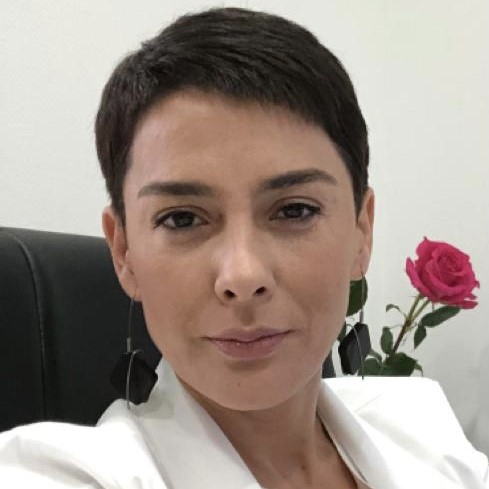
Hyperclinica MedLife Grivita, București
Spitalul Elias București

Ghid de tratament în rozacee
Autori: Dr. Mihaela Vidan Popa, Dr. Mirela Nichita, Prof. Călin Giurcăneanu
Clinica Medlife Grivița București
Spitalul Elias București

Rozaceea este o boală cutanată inflamatorie cronică și recidivantă care afectează în primul rând fața. Se exprimă clinic prin flush-uri la nivelul feței, eritem, telangiectazii și papulo-pustule asemănătoare acneei. Prevalența geografică a acestei boli variază între 1% și 22%. Diagnosticul diferențial este larg iar tratamentul este uneori dificil în funcție de stadiul bolii. Pentru leziunile eritematoase și telangiectazii, terapia cu lumină intens pulsată (IPL) și laser, sunt opțiuni terapeutice populare. Pentru rozaceea papulopustuloasă, atât antibioticele topice și sistemice cât și retinoizii topici și sistemici sunt utilizate. Totodată, ivermectina, un agent acaricid este o alternativă terapeutică. În stadiile avansate, hiperplazia glandelor sebacee duce la apariția rinofimei. Laserele ablative sunt o alternativă terapeutică larg întâlnită azi. Lucrarea reprezintă o sistematizare a materialului publicat în revista JEADV 2017,31,1775–1791 cu actualizarea terapiilor pentru rozacee pâna la această dată. 

Guideline for the treatment of rosacea
Authors: Dr. Mihaela Vidan Popa, Dr. Mirela Nichita, Prof. Călin Giurcăneanu
Medlife Clinic Grivița Bucharest
Elias Hospital Bucharest

Rosacea is a chronic and frequently relapsing inflammatory skin disease primarily affecting the central areas of the face. Rosacea is characterized by symptoms of facial flushing and a spectrum of clinical signs, including erythema, telangiectasia, coarseness of skin, and an inflammatory papulopustular eruption resembling acne. Its geographic prevalence varies from 1% to 22%. The differential diagnosis is wide, and the treatment is sometimes difficult and varies by stage of rosacea. For erythematous lesions and telangiectasia, intense pulsed light (IPL) therapy and lasers are popular treatment option. For papulopustular rosacea, topical antibiotics, topical and systemic retinoids, as well as systemic antibiotics are used. A topical acaricidal agent, ivermectin, has undergone clinical development and is now on the market. In the later stages, hyperplasia of the sebaceous glands develops, resulting in phymatous growths such as the frequently observed bulbous nose or rhinophyma. Ablative laser treatments have largely replaced classical abrasive tools. Our presentation is an adjustment of scientific material published in JEADV 2017,31,1775–1791 with some up-to-date information with regards to rosacea treatment.

Scurt CV

Absolventă a Facultății de Medicină Generală, Universitatea de Medicină și Farmacie Craiova, în anul 1999.
Și-a efectuat rezidențiatul în specialitatea Dermato-Venerologie în Spitalul Elias București, sub îndrumarea Prof. Călin Giurcăneanu. De atunci până în prezent, și-a desfășurat activitatea ca medic specialist, ulterior medic primar, în Hyperclinica Medlife Grivița București.
Ariile de interes sunt dermato-patologia, accesând cursul de „Dermatopatologie Diagnostică” acreditat de London Royal Collage of Pathologist in 2015, precum și dermato-chirurgia și dermato-estetică.
Este membră a Societății Europene de Dermato-Venerologie (EADV), a Societății Române de Dermato-Venerologie și a Primăverii Ieșene.
Are competență în chirurgie dermatologică, dermatoscopie și dermatologie estetică, având experiență în augmentarea cu fillere de umplere, injectări toxină botulinică, peelinguri chimice, tratamente de reîntinerire cu laser, mezoterapie și liftare cu fire.

Contactează operatorul PDI 2022

2 + 4 =

Operatorul PDI 2022

Adresa: Str. A. Panu nr. 13, Iasi
Tel.: 0332.40.88.00-05
E-mail: contact@pdi.ro
Website: www.eventernet.ro

Parteneri Media

Șef Lucr. Dr. Voiculescu Vlad

Șef Lucr. Dr. Voiculescu Vlad

Șef Lucr. Dr. Voiculescu Vlad

Șef. Lucr. Dr. Voiculescu Vlad
Universitatea de Medicină şi Farmacie “Carol Davila” Bucureşti, România

CSIESA: un nou scor pentru evaluarea îmbătrânirii cutanate intrinseci și extrinseci bazat pe microscopie confocală de reflectanță in vivo
Autori: V.M. Voiculescu1,2, A.M. Malciu2, L. Banciu2, E.C. Dobrică2, M. Lupu1,3
1 Catedra de Dermatologie, Universitatea de Medicină și Farmacie „Carol Davila” București, România
2 Clinica de Dermatologie Oncologică și Imunologie Clinică, Spitalul Universitar de Urgență Elias, București, România
3 Departamentul de Dermatologie, Centrul Medical Med-As, București, România

Cuvinte cheie: microscopie confocală de reflectanță; îmbătrânire cutanată; scor confocal

Îmbătrânirea cutanată este un proces fiziologic complex guvernat de factori intrinseci și extrinseci. Creșterea speranței de viață a transformat îmbătrânirea cutanată într-un subiect de interes pentru populația generală. Examenul clinic nu descrie pe deplin acest proces. Deși datele histologice sunt limitate, modificările microscopice care apar în procesul de îmbătrânire al pielii pot fi acum observate și cuantificate direct prin tehnici non-invazive, cum ar fi microscopia confocală de reflectanță in vivo (MCR). Am conceput un studiu prospectiv observațional cu scopul de a dezvolta un scor confocal ușor de utilizat pentru cuantificarea semnelor îmbătrânirii cutanate (CSIESA). Datele au fost colectate la „Centrul Medical Panduri” din București, în perioada 07-28.03.2022. Datorită naturii pivotale a studiului, am decis să înscriem 30 de subiecți. Lotul a fost împărțit în 5 grupe de vârstă: <35; 36–45; 46–55; 56–65 și >65 de ani. Semnele clinice au fost cuantificate folosind scorul „SCINEXA”. Au fost evaluate variabilele confocale cunoscute ale îmbătrânirii cutanate. Am calculat trei scoruri semi-cantitative diferite: scorul dezorganizării epidermice (EDS), scorul hiperplaziei epidermice (EHS) și scorul dermal (DS). EDS a arătat o tendință stabilă până la vârsta de 65 de ani și o creștere dramatică la subiecții >65 ani. EHS a fost caracterizat de o tendință ascendentă de la subiecții mai tineri la cei de vârstă mijlocie. DS a crescut liniar cu vârsta, cu o proporție diferită a tipurilor de colagen. Scorul confocal CSIESA s-a corelat bine cu scorul clinic SCINEXA. MCR este o tehnică non-invazivă aplicabilă pentru cuantificarea microscopică a semnelor de îmbătrânire cutanată.

The CSIESA: A novel score for the assessment of intrinsic and extrinsic skin aging based on reflectance confocal microscopy imaging
Authora: V.M. Voiculescu1,2, A.M. Malciu2, L. Banciu2, E.C. Dobrică2, M. Lupu1,3
1Department of Dermatology, “Carol Davila” University of Medicine and Pharmacy Bucharest, Romania
2Clinic of Oncological Dermatology and Clinical Immunology, Elias University Emergency Hospital, Bucharest, Romania
3Department of Dermatology, Med-As Medical Center, Bucharest, Romania

Keywords: reflectance confocal microscopy, cheilitis, lichen, erythroplasia, psoriasis

Skin ageing is an intricate physiologic process that is governed by intrinsic (chronoageing) and extrinsic factors. Increasing life expectancy have turned skin aging into a topic of growing concern for the general population. Clinical examination of the skin does not fully describe the skin ageing process. Although histological data is limited, the microscopic changes occurring during skin ageing can now be directly observed and quantified through non-invasive techniques, such as in vivo reflectance confocal microscopy (RCM). An observational prospective study was designed with the aim of developing an easy to use confocal score to quantify skin ageing related signs (“CSIESA”). Data were collected at “Centrul Medical Panduri” Clinic in Bucharest between 07- 28.03.2022. Due to the pivotal nature of the study, we decided to empirically enroll 30 subjects. The study population was split into 5 age groups: <35; 36–45; 46–55; 56–65 and >65 years old. Clinical signs were quantified using the “SCINEXA” score. Known confocal variables of skin ageing were evaluated. Three different semi-quantitative scores were calculated: epidermal disarrangement score (EDS), epidermal hyperplasia score (EHS), and dermal score (DS). The EDS showed a stable trend up to the age of 65 and a dramatic increase in older subjects. EHS was characterized by an ascending trend from younger subjects to middle aged ones. The DS was progressive with age with a different proportion of distinct collagen type. The confocal “CSIESA” score correlated well with the SCINEXA score. RCM is a powerful, non-invasive technique for microscopically quantifying the ageing signs.

Scurt CV

Experiența Personală:
2018-prezent – Șef de lucrări – Universitatea de Medicină şi Farmacie “Carol Davila” Bucureşti, România

Educaţie şi formare:
2013 – prezent – Medic primar dermato-venerolog – Spitalul Universitar de Urgenţă „Elias”, Bucureşti
2014 – prezent – Doctor in stiinte medicale – Universitatea de Medicină şi Farmacie “Carol Davila” Bucureşti, România

Membru în organizaţii profesionale:
• 2015 – prezent: membru al Consiliului director al SRD (Romanian Society of Dermatology)
• 2013 – prezent: membru al European Academy of Dermatology and Venerology (EADV) Alumi Club
• 2011 – prezent: membru al International Dermoscopy Society (IDS)
• 2010 – prezent: membru al EADV (European Academy of Dermatology and Venerology)
• 2008 – prezent: membru al Societăţii Romane de Dermatologie
• 2008 – prezent: membru în Colegiul Medicilor din Bucureşti

Lista lucrărilor ştiinţifice publicate:
• 2008 – prezent: am publicat 21 articole ISI in extenso, 32 de articole IDB (international data-base indexed) in extenso si peste 40 de articole in resumat (prezentate ca postre sau comunicari oreale la diferite manifestari stiintifice nationale sau internationale)
• 2016 – prezent: speaker invitat la peste 10 manifestari nationale de Dermatologie
• 2008 – prezent: am participat la peste 18 manifestari stiintifice internationale si peste 20 de manifestari stiintifice nationale (din domeniul meu de activitate)

Contactează operatorul PDI 2022

12 + 10 =

Operatorul PDI 2022

Adresa: Str. A. Panu nr. 13, Iasi
Tel.: 0332.40.88.00-05
E-mail: contact@pdi.ro
Website: www.eventernet.ro

Parteneri Media
Prof. Univ. Dr. Zurac Sabina

Prof. Univ. Dr. Zurac Sabina

Prof. Univ. Dr. Zurac Sabina

Prof. Dr. Zurac Sabina
Universitatea de Medicină şi Farmacie “Carol Davila” Bucureşti
Spitalului Clinic Colentina, București

Inteligența artificială în histopatologie: Experiența Spitalului Clinic Colentina și Zaya Artificial Intelligence
Autori: Sabina Zurac1,2,3*, Cristiana Popp1,3*, M Trascau3,4*, C Mogodici3*, Luciana Nichita1,2,3, Mirela Cioplea1,2,3, T Poncu3, B Ceachi3, Liana Sticlaru1,2,3, Alexandra Cioroianu1,2,3, M Busca1,3, Oana Stefan1, Irina Tudor1, A Voicu3, Daliana Stanescu3, Alexandra Bastian1,2
*autori cu contributie egala

1 Spitalul Clinic Colentina
2 Universitatea de Medicină și Farmacie Carol Davila Bucuresti
3 Zaya Artificial Intelligence SRL
4 Universitatea Politehnică Bucuresti

Inteligența artificială, tuberculoza, mycobacterium tuberculosis, Ziehl Nielsen

Tuberculoza reprezintă prima cauză de deces prin boală infecțioasă. Ideal, diagnosticul TBC se bazează pe identificarea Mycobacteriilor. Deoarece Mycobacterium tuberculosis este o bacterie de 2-4/0,2-0,5 microni, căutarea ei în lamele colorate Ziehl Nielsen (ZN) cu obiectiv microscopic 40X (diametru 0,5 mm) durează ore; inteligența artificială poate oferi soluții viabile în acest domeniu.
Echipa noastră include patologi, ingineri de machine learning și experți în IT și economie. Setul de date de antrenare include 500.000 de casete de delimitare pozitive și 1.000.000 negative provenite din lamele ZN a 81 de blocuri de parafină (21 pozitive, 60 negative); toate lamele au fost scanate folosind scanere manuale și automate; 7 patologi au notat zone pozitive și negative. Echipa de machine learning a propus mai multe tehnici de augmentare a imaginii cuplate cu diferite arhitecturi de computer vision. Setul de date de testare include 23 de lame ZN pozitive și 23 negative (46 de blocuri); lamele au fost scanate integral (whole slide images – WSI). 4 echipe de patologi au evaluat separat WSI-urile și lamele; WSI-urile au fost încărcate pentru analiză automată.
Analiza automată a WSI generează un raport care indică zonele susceptibile de a prezenta micobacterii. Arhitectura noastră prezinta rezultate foarte bune (0.9020 pe curba ROC). Rezultatele testului final (mașină versus om care evaluează WSI, mașină versus om care evaluează lame și om care evaluează WSI versus lame) arată acuratețe peste 90% în toate cazurile.
Software-ul bazat pe inteligență artificială pentru analiza automată a lamelor colorate ZN prezintă rezultate fiabile, oferind o economie extraordinară în timpul și efortul patologului.

Artificial Intelligence in histopathology: Colentina University Hospital and Zaya Artificial Intelligence experience
Autori: Sabina Zurac1,2,3*, Cristiana Popp1,3*, M Trascau3,4*, C Mogodici3*, Luciana Nichita1,2,3, Mirela Cioplea1,2,3, T Poncu3, B Ceachi3, Liana Sticlaru1,2,3, Alexandra Cioroianu1,2,3, M Busca1,3, Oana Stefan1, Irina Tudor1, A Voicu3, Daliana Stanescu3, Alexandra Bastian1,2
*Authors with equal contribution

1 Colentina University Hospital
2 University of Medicine and Pharmacy Carol Davila Bucharest
3 Zaya Artificial Intelligence SRL
4 University of Polytechnics Bucharest

Artificial intelligence, tuberculosis, mycobacterium tuberculosis, Ziehl Nielsen

Tuberculosis represents the first cause of death by infectious diseases. Ideally, TB diagnosis relies on Mycobacteria identification. Since Mycobacterium tuberculosis is a 2-4/0.2-0.5 microns bacterium, its searched in Ziehl Nielsen (ZN) stained-slides with 40X microscopic objective (0.5mm diameter) takes hours; artificial intelligence may offer viable solutions in this field.
Our team includes pathologists from Colentina University Hospital, machine learning engineers from University of Polytechnics Bucharest and experts in IT and economics from Zaya Artificial Intelligence SRL. Our training data set includes 500.000 positive and 1.000.000 negative bounding boxes originating in ZN-stained slides of 81 paraffin blocks (21 positive, 60 negative); all the slides were scanned using manual and automated slide scanners; 7 pathologists annotated positive and negative areas. The machine learning team has proposed several image augmentation techniques coupled with different custom computer vision architectures. Our testing data set includes 23 positive and 23 negative ZN-stained slides (from 46 paraffin blocks); the slides were scanned as whole slide images (WSIs). 4 teams of pathologists separately evaluated the WSIs and the original slides; the WSIs were sent for automatic analysis.
WSIs automatic analysis was followed by a report indicating areas more likely to present Mycobacteria. Our architecture showed very good results (0.9020 on ROC curve). The results of final test (machine versus man evaluating WSIs, machine versus man evaluating slides and man evaluating WSIs versus slides) showed accuracy over 90% in all cases.
AI-based software for automated analysis of ZN-stained slides shows reliable results, offering a tremendous economy in pathologist’s time&effort.

Scurt CV

Professor of Pathology in Faculty of Dental Medicine, University of Medicine and Pharmacy “Carol Davila” Bucharest, senior pathologist and head of the Department of Pathologicy Colentina University Hospital, Bucharest, Romania.
Specializations in the field of dermatopathology (Austria 2012), molecular biology (Italy 2012), digestive pathology (Bucharest 2016, 2015, 2011, 2010, 2009 and 2008), oral pathology (the Netherlands 2005-2006), immunohistochemistry (Bucharest 2004; Greece 2001 ), lymphoid pathology (Greece 2001), pulmonary pathology (Italy 1999), soft tissue pathology (Greece 1997), liver pathology (Greece 1996)
Member of the European Society of Pathology, International Academy of Pathology, International Society of Dermatopathology, Romanian Society of Dermatooncology, Romanian Association of Immunodermatology, European Academy of Dermatovenerology
Author of over 330 scientific papers presented at national and international congresses and symposiums, over 125 articles published in specialized magazines, 23 specialized chapters / monographs. H-index (WOS all data bases) 10; citations: 460.
Researcher / manager / project manager in 16 research projects
Areas of interest: dermatopathology, oral pathology, infectious pathology, soft tissue tumors

Contactează operatorul PDI 2022

3 + 2 =

Operatorul PDI 2022

Adresa: Str. A. Panu nr. 13, Iasi
Tel.: 0332.40.88.00-05
E-mail: contact@pdi.ro
Website: www.eventernet.ro

Parteneri Media

Dr. Moraglia Luc

Dr. Moraglia Luc

Dr. Moraglia Luc

Dr. Moraglia Luc
University Hospital of Bordeaux, Franța

French “Choosing Wisely” Occlusive treatment of saphenous veins and recurrences
Author: Luc Moraglia

Between 2013 and 2016 the HAS (French Health Authority) validated successively the ablation of the great saphenous vein (GSV) by radio frequency (RFA), the possibility of using some sclerosing agent in the form of foam, and the ablation of the GSV and SSV by endovenous Laser (EVLA).
But in the end it declares itself unable to rank these techniques.
Between 2014 and 2019 the French National Health Insurance Fund (CNAM) validated the reimbursement of thermal ablation (TA) and also of 3 new procedures for Ultrasound Guided Foam Sclerotherapy (USGFS) of GSV, SSV, and complex recurrent varicose veins.
But, the CNAM fears a slippage in health expenses and has asked the National Professional Council of Vascular Medicine for guidelines. The French Society of Phlebology (SFP) and the French Society of Vascular Medicine (SFMV) are requested to do the job. In the meantime the Ministry of Health has insisted on the relevance of care, so the concept of “Choosing Wisely” (CW) seemed more in line with this policy.
The CWs provide both the physician and the patient with key elements to make an appropriate decision that is accepted by the patient.
So 2 writers C. Hamel-Desnos and G. Miserey and 29 reviewers (all Vascular Doctors) have been designated to develop these CWs for chemical or thermal occlusion treatments under the aegis of the National (French) Professional Council of Vascular Medicine (CNPMV), among these 10 CWs that we will present here, most are obvious and some are typically adapted to the French context.
Conclusion: These 10 “relevant choices” represent a consensus of French experts, based on international literature and were developed under the aegis of the National (French) Professional Council of Vascular Medicine; they have been accepted by the CNAM and have been under evaluation in our daily practice for a few months. These are not recommendations but the SFP, the SFMV and the SNMV (Union) are doing their utmost to get the message across to French vascular medicine specialists.

French technique
Author: Luc Moraglia

Luc Moraglia MD – Vice president of SFP

Objective: To describe the guidelines of the French technique of chemical ablation of the great saphenous vein (GSV).
Method: a brief history will identify the reality of the concept of French method, and then will be reminded of the technique, the results through some French studies and the side effects that are actually not specific. We conclude with limitations and medium-term prospects.
Results: whether in the development of sclerotherapy, in particular by contribution from school Raymond Tournay, for the introduction of ultrasound guidance, the use of sclerosing foam, making the extemporaneous foam , the validation of the effectiveness of ultrasound guided foam sclerotherapy by randomized controlled trials and evaluation and understanding of complications in studies dedicated , French phlebologists played a essential role which led to the concept of French method which got through the recent European guidelines ( recommendation 19) the status of recommended method (grade 1C) in the chemical ablation of the GSV .
Discussion : limits , besides the contraindications, are mainly located at the caliber of the vein to be treated . In France this limit will remain blurred as we will only have one foaming sclerosing agent and the thermal ablation techniques will still not be refunded. It is not unreasonable in this situation to put this limit high enough, around 8 to 10 mm. Refund of the thermal ablation should reduce this limit below 6 mm , pending the emergence and validation of new techniques.
Conclusion : The concept of French technique of chemical ablation of the GSV (such as the small saphenous vein elsewhere) , result of the works of the French school of Phlebology within the SFP is a fact reinforced by the European recommendations, and certainly still have nice future ahead of it .

Scurt CV

Education and qualifications:
Doctorate in medicine: 1982 – Lyon France
Qualified in vascular medicine 02/2020
Current Job position:
– Private Practice of Angiology, Phlebology and Vascular Laboratory since: 1984;
– Former attached practitioner of the internal and vascular medicine department of University Hospital of Bordeaux.

Other:
Membership in professional associations:
Member of the board of directors of Conseil National Professionnel de Médecine Vasculaire;
Vice President of Société Française de Phlébologie;
Member of the board of directors of Collège Français de Pathologie Vasculaire;
Member of Collège des Enseignants en Médecine Vasculaire;
Member of VAS Advisory Board.

Main publications: since 2014
Exploration ultrasonore de l’insuffisance veineuse superficielle (JF Auvert, L Moraglia) in Les explorations vasculaires Elsevier Masson 2014;
Chemical ablation of the great saphenous vein: French spirit. L Moraglia Phlebologie 2014, 67, 1, p31-25;
Sclérothérapie (C. Hamel-Desnos, L. Moraglia, A.- A. Ramelet), in La maladie veineuse chronique Elsevier Masson 2015;
Duplex ultrasound assessment in PREsence of Varicose veins After operatIve Treatment (PREVAIT) Phlebologie 2019, 72, 2, 78-91;
Epidemiology of Chronic Venous Disease of Lower Limbs in VAS European Book on Vascular Medicine/Angiology 2018;

Contactează operatorul PDI 2022

2 + 1 =

Operatorul PDI 2022

Adresa: Str. A. Panu nr. 13, Iasi
Tel.: 0332.40.88.00-05
E-mail: contact@pdi.ro
Website: www.eventernet.ro

Parteneri Media