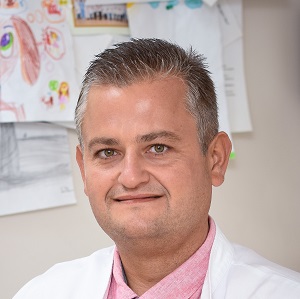

Prof. Dr. Razvigor Darlenski

Prof. Dr. Razvigor Darlenski

Prof. Dr. Razvigor Darlenski

Assoc. Prof. Dr. Razvigor Darlenski
Acibadem Cityclinic Tokuda Hospital Sofia Bulgaria

Dermatologic adverse effect to targeted and immunotherapy of cancer
Autor: Assoc. Prof. Dr. Razvigor Darlenski

The wide variety of drug-induced dermatoses requires deep knowledge in this specific field.The latest clinical researches has discovered important facts about classification, pathogenesis and therapeutic approaches in toxic skin reactions due to target treatment. Although dermatologic toxicities with systemic cancer therapies are very frequent, a minority of cancer patients visit a dermatologist during their therapy.

Usually the dermatologic toxicities include impairment of the skin, oral mucosa, hair, and nails. The most common adverse reaction is acneiform rash, which is observed in 25–85% of patients treated by epidermal growth factor receptor and mitogen-activated protein kinase kinase inhibitors. BRAF inhibitors most often lead to hyperkeratotic skin reactions like hand-foot skin reaction or palmoplantar keratoderma, squamous cell carcinoma, keratoacanthomas and maculopapular hypersensitivity-like rash. Immune checkpoint inhibitors most frequently induce nonspecific maculopapular rash, but also eczema-like or psoriatic lesions, lichenoid reactions, xerosis cutis, and pruritus. mTOR inhibitors very often are responsible for the oral mucosal toxicities like mucositis and stomatitis, followed by stomatitis associated with multikinase angiogenesis and HER inhibitors. Targeted therapies and endocrine therapy also commonly induce alopecia,vitiligo, bullous dermatoses etc. Finally, targeted therapies may damage nail folds, with paronychia and periungual pyogenic granuloma distinct from chemotherapy-induced lesions.

It’s important not only to understand the etiopathogenesis but also to establish universal treatment guidelines, that can be used by dermatologists, oncologists, radiologists, dental specialists etc. The multidisciplinary approach is the most important way to achieve higher quality of life in those patients.

Scurt CV

Razvigor Darlenski is a dermatologist coming from Bulgaria. In 2014 he was selected as an associate professor at Trakia University, Stara Zagora. In 2010 he has defended a PhD thesis on the role of epidermal barrier for skin irritation and sensitization. Currently he is working as dermatologist at Tokuda Hospital Sofia, Bulgaria. Dr. Darlenski has published more than 70 papers in peer-reviewed journal and he is also an author of 12 book chapters. Dr. Darlenski is a member of the following organizations: Bulgarian Dermatological Society (BDS), member of the Honours & Awards committee of the European Academy of Dermatology and Venereology, Junior working group of the World Allergy Organization, European Academy of Allergology and Clinical Immunology, European Epidermal Barrier Research Network, European Network for Cutaneous Adverse Effects of Drugs (ENCAD), European Surveillance System on Contact Allergies, Union of Scientist in Bulgaria, Bulgarian Allergology Society, Bulgarian Medical Association, National Bulgarian Society of Aesthetic Surgery and Aesthetic Medicine, International society of skin physiology and pharmacology (ISP).
He is a winner of several awards among which Inaugural Edward L. Keyes award of the IACD for this meeting in Cancun (2012), Winner of the EER fellow award of the ESDR and ASDV (2013), Michael Hornsetin Memorial Scholarship of the EADV (2009).
His research interests are focused on skin barrier, drug reactions of the skin, skin irritation, contact allergy, urticaria, atopic eczema, and non-invasive methods in dermatology.

Contactează operatorul PDI 2022

2 + 10 =

Operatorul PDI 2022

Adresa: Str. A. Panu nr. 13, Iasi
Tel.: 0332.40.88.00-05
E-mail: contact@pdi.ro
Website: www.eventernet.ro

Parteneri Media

Prof. Dr. Ciocoiu Manuela

Prof. Dr. Ciocoiu Manuela

Prof. Dr. Ciocoiu Manuela

Prof. Dr. Ciocoiu Manuela
Universitatea de Medicină şi Farmacie “Grigore T. Popa” Iaşi

Mecanisme fiziopatologice implicate în interrelaţia psoriazis – inflamaţie – disfuncţia sistemului imun
Autori: Manuela Ciocoiu1, T. Ionescu1, Codruţa Bădescu2

1 – Disciplina de Fiziopatologie, UMF “Grigore T. Popa” din Iaşi
2–Departamentul Specialităţilor Medicale I, UMF “Grigore T. Popa” din Iaşi

Cuvinte cheie: psoriazis, inflamaţie, clusterina și elafina

Psoriazisul este o boală sistemică cronică mediată imun cu o bază imunogenetică, care poate fi declanșat intrinsec (factori genetici) și extrinsec de diverși factori (de exemplu, stres, traume mecanice, infecție, medicamente, nutriție, fumat sau obezitate). Locusul de susceptibilitate la psoriazis de pe cromozomul 6p21 (locația genelor HLA) este considerat a fi un determinant genetic major al psoriazisului. Psoriazisul prezintă trăsături ale unei boli autoimune pe un fundal (auto)inflamator, cu ambele mecanisme suprapunându-se și chiar potențându-se unul pe celălalt. Patogenia psoriazică poate fi conceptualizată în 2 faze: o fază inițială declanșată, probabil, de o traumă, infecție sau medicamente și o fază de întreținere caracterizată printr-o progresie clinică cronică. În timp ce axa TNF-IL23-Th17 joacă un rol central în psoriazisul în plăci mediat de celulele T, sistemul imunitar înnăscut pare să joace un rol mai proeminent în variantele pustuloase ale psoriazisului. În psoriazisul gutat, se crede că superantigenele streptococice stimulează expansiunea celulelor T în piele, întrucât s-a demonstrat că există o omologie considerabilă de secvență între proteinele M streptococice și proteinele 17 ale keratinei umane. Psoriazisul pustular este caracterizat printr-o exprimare crescută a transcrierilor IL-1β, IL-36α și IL-36γ comparativ cu psoriazisul vulgar. În fiziopatologia psoriazisului sunt implicate o gamă largă de molecule, fie ca factori care influenţează patogenia, fie ca factori de protecție. Nivelurile de clusterina și elafina, care sunt strâns legate de inflamație, au fost semnificativ crescute la pacienții cu psoriazis, comparativ cu martorii sănătoşi, Cercetările viitoare vor contribui la elucidarea fiziopatologiei interrelaţiilor dintre psoriazis, comorbidităţile pro-inflamatorii şi disfuncţia sistemului imun.

Pathophysiological mechanisms involved in the interrelationship of psoriasis – inflammation – immune system dysfunction
Authors: Manuela Ciocoiu1, T. Ionescu1, Codruţa Bădescu2

1 – Department of Pathophysiology, UMF „Grigore T. Popa” from Iaşi
2 – Department of Internal Medicine I, UMF „Grigore T. Popa” from Iaşi

Keywords: psoriasis, inflammation, clusterin and elafin

Psoriasis is an immune-mediated chronic systemic disease with an immunogenetic basis, which can be triggered intrinsically (genetic factors) and extrinsically by various factors (e.g., stress, mechanical trauma, infection, medication, nutrition, smoking, or obesity). The psoriasis‑susceptibility locus on chromosome 6p21 (location of the HLA genes) is thought to be a major genetic determinant of psoriasis. Psoriasis has features of an autoimmune disease on a (self) inflammatory background, with both mechanisms overlapping and even potentiating each other. Psoriatic pathogenesis can be conceptualized in 2 phases: an initial phase, probably triggered by trauma, infection or medication, and a maintenance phase characterized by a chronic clinical progression. While the TNF-IL23-Th17 axis plays a central role in T-cell-mediated plaque psoriasis, the innate immune system appears to play a more prominent role in the pustular variants of psoriasis. In guttate psoriasis, streptococcal superantigens are thought to stimulate the expansion of T cells in the skin, as there has been shown to be considerable sequence homology between streptococcal M proteins and human keratin 17 proteins. Pustular psoriasis is characterized by an increased expression of IL-1β, IL-36α and IL-36γ transcripts compared to vulgar psoriasis. A wide range of molecules are involved in the pathophysiology of psoriasis, either as factors influencing the pathogenesis or as protective factors. Clusterin and elafin levels, which are closely linked to inflammation, have been significantly increased in patients with psoriasis compared to healthy controls. Future research will help elucidate the pathophysiology of the interrelationships between psoriasis, pro-inflammatory comorbidities, and immune system dysfunction.

 Scurt CV

Coordonator al activităţii didactice la Disciplina de Fiziopatologie
Universitatea de Medicină şi Farmacie “Gr. T. Popa” Iaşi
Medic primar Medicină Internă
Vicepreşedintele Societăţii Române de Fiziopatologie

Contactează operatorul PDI 2020

12 + 10 =

Operatorul PDI 2020

Adresa: Str. A. Panu nr. 13, Iasi
Tel.: 0332.40.88.00-05
E-mail: inscrieri@primaderma.ro
Website: www.eventernet.ro

Parteneri Media

Prof. Dr. Ciubară Anamaria

Prof. Dr. Ciubară Anamaria

Prof. Dr. Ciubară Anamaria

Prof. Dr. Ciubară Anamaria
Facultatea de Medicină și Farmacie, Universitatea ‘Dunărea de Jos’, Galați

Etaloane înșelătoare ale frumuseții
Anamaria Ciubară1, Ana-Cătălina Chiroşcă2, Liliana Luca1

1Facultatea de Medicină și Farmacie, Universitatea “Dunărea de Jos”, Galați
2student, Universitatea de Medicină și Farmacie ’ Carol Davila’, București

Cuvinte cheie: istorie, frumusețe, modificări corporale

Preocuparea pentru frumusețe a existat din cele mai vechi timpuri, luînd diverse forme și urmând anumite tendințe. Printre modalitățile de înfrumusețare, modificările corporale ocupă un rol important din punct de vedere cultural.
Modificările corporale reprezintă alterări permanente sau semipermanente ale înfățișările, prin diverse metode, cu scopuri variate, precum conformarea la standardele de frumusețe, pentru a evidenția un statut social sau în cadrul unor ritualuri culturale.
Lucrarea de față este o prezentare succintă a diversității culturale din întreaga lume, în funcție de particularitățile etnice, geografice, religioase si istorice specifice fiecărei epoci.

History of beauty 
Anamaria Ciubară1, Ana-Cătălina Chiroşcă2, Liliana Luca1, A.B. Ciubară1

1Faculty of Medicine and Pharmacy, “Dunărea de Jos” University, Galati
2student, ‘Carol Davila’ University of Medicine and Pharmacy, Bucharest

Keywords: history, beauty, body modifications

The concern for beauty has been a part of society since the oldest times, taking various forms and following certain trends. Amongst beauty enhancing methods, body modifications occupy an important role regarding culture. Body modifications are permanent or semi permanent alterations to one’s appearance, through various methods, with purposes ranging from fitting into beauty standards, showing social status, or as part-taking in religious practices. This presentation is a succinct history of cultural diversity across the world, depending on ethnical, geographical, religious and historical particularities of each era.

Scurt CV

Certified physician practicing psychiatry at “Elisabeta Doamna” Psychiatry Hospital, Galati, Romania. She is teaching Psychiatry and Behavioral Sciences course as Professor at the Faculty of Medicine and Pharmacy within the „Dunarea de Jos” University Galati. Anamaria Ciubara is a member of Psychiatric Advisory Committee for Ministry of Health, editor of the „American Journal of Psychiatry and Neuroscience” and is involved in many research, educational and advocacy projects in psychiatry.

Contactează operatorul PDI 2022

5 + 10 =

Operatorul PDI 2022

Adresa: Str. A. Panu nr. 13, Iasi
Tel.: 0332.40.88.00-05
E-mail: contact@pdi.ro
Website: www.eventernet.ro

Parteneri Media

Cercetător Senior Constantin Carolina

Cercetător Senior Constantin Carolina

Cercetător Senior Constantin Carolina

Cercetător Senior Constantin Carolina

Institutul Naţional de Cercetare-Dezvoltare în Domeniul Patologiei şi Ştiinţelor Biomedicale “Victor Babeş” Bucureşti
Serviciul de Anatomie Patologică, Spitalul Clinic Colentina, Bucureşti

Nanomedicina în vaccinarea ANTI-SARS-COV-2
Autori: Carolina Constantin1,2, Mihaela Surcel1, Adriana Narcisa Munteanu1,3, Sabina Andrada Zurac 2,4, Monica Neagu 1, 2, 3

1Secția Imunologie, Institutul Naţional de Cercetare-Dezvoltare în Domeniul Patologiei şi Ştiinţelor Biomedicale „Victor Babeş” Bucureşti
2Serviciul de Anatomie Patologică, Spitalul Clinic Colentina, Bucureşti
3Școala Doctorală, Facultatea de Biologie, Universitatea Bucureşti
4Departamentul de Patologie, Facultatea de Medicină Dentară, Universitatea de Medicină şi Farmacie „Carol Davila”, Bucureşti

Cuvinte cheie: COVID-19; SARS-CoV-2; imunitate; nanoparticule; carrier; vaccin.

Pandemia de COVID-19 a demonstrat ca vaccinarea reprezinta cea mai puternică metodă de prevenire a infectiei, iar datele stiintifice aferente în actuala pandemie continua sa creasca într-un ritm accelerat. O nouă eră a nanomedicinei începe în domeniul dezvoltării vaccinurilor, eră care va genera noi instrumente de diagnosticare a infectiei virale și/sau de actiune antivirala. Mesagerii cheie ADN sau ARN, vehiculul de livrare a unui mesager de acest tip precum si interacțiunile acestor mesageri cu sistemul imun, converg spre suprimarea infecției cu SARS-CoV-2.
Deoarece majoritatea vaccinurilor anti-virale urmăresc în primul rând să genereze un răspuns imun mediat de anticorpi, viitorul apropiat în vaccinarea COVID-19 va necesita informații importante privind imunitatea mediata de limfocitele T și B la subiecții vaccinați. Aceste studii pot ghida dezvoltarea strategiilor de protecție eficientă împotriva SARS-CoV-2 si nu numai. Deoarece SARS-CoV-2 și diferitele sale variante vor circula probabil pentru mulți ani de acum înainte, apare necesitatea dezvoltarii de vaccinuri tot mai eficiente și sigure împotriva COVID-19, pentru mutațiile virale anticipate. Astfel, ar trebui urmărite noi formulări care extind căile de administrare și momentul vaccinării. Noile formulări pot reduce efectele secundare, iar nanomaterialele din surse naturale vor intra în fluxul de dezvoltare a vaccinurilor. In plus, viteza cu care au fost dezvoltate vaccinurile pe bază de ARNm poate conduce la o nouă eră în alte domenii, cum ar fi oncologia.
Studiu finanțat prin proiectele: PN-III-P1-1.2-PCCDI-2017-0341/2018, PN 19.29.01.01/2019.

Nanomedicine in anti sars-cov-2 vaccination
Authors: Carolina Constantin1,2, Mihaela Surcel1, Adriana Narcisa Munteanu1,3, Sabina Andrada Zurac 2, 6, Monica Neagu 1, 2, 3

1Immunology Department, „Victor Babes” National Institute of Pathology, Bucharest
2Pathology Department, „Colentina” University Hospital, Bucharest
3Doctoral School, Faculty of Biology, University of Bucharest, Bucharest
4Pathology Department, Faculty of Dental Medicine, “Carol Davila” University of Medicine and Pharmacy, Bucharest

Keywords: COVID-19; SARS-CoV-2; immunity; nanoparticles; vaccine carrier; vaccines.

As the current COVID-19 pandemic illustrates, vaccination is the most powerful method of disease prevention and public confidence in vaccines depends on their safety and efficacy. The information gathered in the current pandemic is growing at an accelerated pace. Both the key vital protein DNA/RNA messengers and the delivery carriers are the elements of a puzzle including their interactions with the immune system to suppress SARS-CoV-2 infection. A new nano-era is beginning in the vaccine development field and an array of side applications for diagnostic and antiviral tools will likely emerge.
As most viral vaccines primarily aim to generate an antibody-mediated immune response, the near future in COVID-19 management would require important information regarding T and B cell immunity in both COVID-19 patients and in vaccinated subjects. These studies can guide the development of strategies for effective protection from SARS-CoV-2. Moreover, SARS-CoV-2 and its various variants will likely circulate for many years to come, efficient and safe COVID-19 vaccines should be developed and /or revisited for anticipated viral mutations. New formulations may decrease side effects, and nano-sized materials from natural sources will enter the pipeline. The speed with which the mRNA-based vaccines were developed may lead to a new era in other domains, such as oncology.
Study financed by the following projects: PN-III-P1-1.2-PCCDI-2017-0341/2018, PN 19.29.01.01/2019.

Scurt CV

Senior researcher I, PhD, biochemist, “Victor Babeș” National Institute of Pathology, Immunology Laboratory & Colentina Clinical Hospital, Research Core of Pathology Department, Bucharest.
Research topics: immune parameters analysis and biomarker discovery in melanoma and non-melanoma skin cancer; co-inventor for 4 patents related to photodynamic therapy PDT in skin pathologies. Dr. Constantin conducted national research projects related to novel photosensitizers for PDT in cancer, and drug-delivery nanosystems for skin regeneration; partner responsible for MNT_ERANET project 7030-1/2010 related to novel porphyrins in theranostics. Specialization in molecular biology at Ludwig Institute for Cancer Research, Signal Transduction Unit (Bruxelles); cellular biology specialization at University of Athens, Biochemistry and Physiology Department, in the frame of NATO SfP 982838/2007 project. Technical expert in 5 EU projects for biomedical assays; teaching experience in protein microarray technology; volunteer reviewer for several ISI journals.
Currently involved as MC member for COST Action CA18127 – International Nucleome Consortium (INC); MC substitute of the management committee for COST action CA16120 – European Epitranscriptomics Network (EPITRAN); alternate member of the management committee for CA18125 – Advanced Engineering and Research of Aerogels for Environment and Life Sciences (AEROGELS).

Contactează operatorul PDI 2022

4 + 3 =

Operatorul PDI 2022

Adresa: Str. A. Panu nr. 13, Iasi
Tel.: 0332.40.88.00-05
E-mail: contact@pdi.ro
Website: www.eventernet.ro

Parteneri Media

Dr. Daniel O. Costache

Dr. Daniel O. Costache

Dr. Daniel O. Costache

Dr. Daniel O. Costache
Spitalul Universitar de Urgenţă Militar Central ”Dr. Carol Davila”, Bucureşti

Manifestările cutanate în afecțiunile cronice hepatice
Autori: D.O. Costache, Raluca S. Costache

Rezumat: Tegumentul este primul, iar ficatul al doilea cel mai mare organ din corpul omenesc. Între cele două organe există relații funcționale directe și indirecte, tegumentul reprezentând o oglindă a funcțiilor interne, implicit hepatice. Prezentăm sumar principalele modificări cutanate care se înregistrează în patologia cronică hepatică: hepatite cronice virale și toxic-nutriționale, ciroză hepatică, ciroză biliară primitivă, boala Wilson etc.
Cel mai adesea, diagnosticul inițial se pune tocmai în baza semnelor și simtomelor tegumentare. Cunoașterea în profunzime a acestora garantează un diagnostic precoce, care să ofere o șansă terapeutică pacienților.

Scurt CV

Medic primar dermatovenerologie
Doctor în ştiinţe medicale – Studiul microcirculaţiei sanguine în patologia cutanată
Coordonator activitate de cercetare, studii clinice la Spitalul Universitar de Urgenţă Militar Central ”Dr. Carol Davila”, Bucureşti.
Editor executiv, Romanian Journal of Military Medicine, revistă editată de Asociaţia Medicilor şi Farmaciştilor Militari din România, Universitatea de Medicină şi Farmacie “Carol Davila” București.
Delegat Ministerul Apărării Naţionale în Consiliul Naţional al Colegiului Medicilor din România.
Activitate clinică şi de cercetare în cadrul departamentului de Dermatologie al Spitalului Universitar de Urgenţă Militar Central ”Dr. Carol Davila”, Bucureşti.
Competenţă în evaluarea microcirculaţiei.
Competenţă în electrochirurgie şi laser chirurgie în dermatologie.
Formator de formatori în dermatocosmetologie.

Contactează operatorul PDI 2022

12 + 7 =

Operatorul PDI 2022

Adresa: Str. A. Panu nr. 13, Iasi
Tel.: 0332.40.88.00-05
E-mail: contact@pdi.ro
Website: www.eventernet.ro

Parteneri Media