
Dr. Milleret Rene

Dr. Milleret Rene

Dr. Milleret Rene

Prof. Dr. Rene Milleret
Clinica Venart, Cluj-Napoca, România
Membru al Academiei Naționale de Chirurgie

Recurrences after foam ablation of saphenous trunks

Authors: R. Milleret, Z. Galajda
Medical Center SanConfind Poiana Campina, Romania

Ultrasound guided foam sclerotherapy is a safe and inexpensive technique for closing incompetent Saphenous trunks.
Medium term results show a re-opening rate of 25 to 35%, while thermal techniques: Laser and Radio-Frequency only re-open in 5 to 10 % of patients.
How can we improve these results?
2 parameters are important for the success of sclerotherapy: time of contact of the foam to the vein wall, and removal of blood in the lumen, as blood proteins inactivate the sclerosing agent.
Another issue is the depth of penetration of the sclerosant: without adjunctive manoeuvres, it is limited to 300 microns, enough to destroy the endothelium, but not to damage the media, which is necessary to obtain a retraction of the vein wall.
Over the last 25 years, many techniques have been tested in order to improve the long- term closure rate.
2 trends are possible: improve the delivery of foam, or add another ablation method: hybrid technique.
Foam delivery: Instead of a single needle puncture, we can use several Short Catheters: Venflon®, one every 10 cm. These staged injections avoid dilution and inactivation of the foam in blood. But the time of contact is not significantly improved.
Long catheter delivery is often combined by external compression f the vein to remove as much blood as possible. This can be obtained either by global compression of the limb with an Esmarch bandage: Alpha-Technique, or by intra-fascial tumescence, as when performing laser ablation.
Our 3 years results after Alpha-Technique confirm the improvement with 85 % of veins still closed.
Recently a specific catheter was introduced: the Sclero Safe device. Its double channels allow simultaneous injection of foam and removal of blood.
First results are good, but long term closure rate ate not available yet.
Hybrid techniques: Frullini studied heating of the vein at 60 °C with a Holmium laser combined with foam injection: this method was supposed to avoid tumescent anesthesia around the vein, which is necessary with conventional laser procedures. It did not become popular because the cost of the laser and its fibers was too high. More recently Carlos Boné used a 1940 nm laser at low powzer: 3 watts, again combined with foam injection with promising short term results.
MOCA: mechanical and chemical ablation was invented by Michael Tal and Steve Elias; They introduce in the vein a long catheter with a rotating tip driven by an electric engine to ablate the endothelium, combined with an injection of liquid sclerosing agent or foam. This Clari- Vein® catheter has been used in thousands of patients and long-term results are good in trunks up to 8 mm of diameter.
A non-mechanical option is the Phlebogrif® catheter which deploys several metal struts to remove endothelium, while injecting foam.
Conclusion: these different options do improve the closure rate but it is still inferior to what is achieved with thermal techniques, and the cost can be similar. Alpha-technique and probably the most economical way to achieve better results at a reasonable cost.

Scurt CV

Member of Académie Nationale de Chirurgie
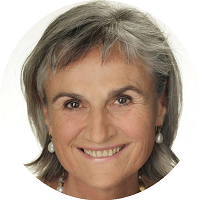
Dr. Milleret is a vascular surgeon with a training in electronics.
He built his own Doppler machines since 1971 and used them to develop new techniques in Phlebology.
He performed the first deep vein valvuloplasty in Europe (1978), introduced Cryo-fibrosis
And Cryo-stripping for ablation of Saphenous trunks. When endovenous surgery appeared he devised a Steam Ablation technique which allows thermal ablation of tributary veins perforators.
His current research is focused on Transcutaneous Ultrasonic methods to treat refluxing veins Non-invasively, and on Prosthetic venous valves for deep venous insufficiency.

Contactează operatorul PDI 2026

9 + 8 =

Operatorul PDI 2026

Adresa: Str. A. Panu nr. 13, Iasi
Tel.: 0332.40.88.00-04
E-mail: contact@pdi.ro
Website: www.eventer.ro

Dr. Tsolakou Annia

Dr. Tsolakou Annia

Dr. Tsolakou Annia

Doctor Annia Tsolakou
School of Health Sciences, National and Kapodistrian University of Athens, Athens, Greece

Genetic Variations and Oxidative Stress: Investigating Their Role in Psoriasis Susceptibility

Authors: Tsolakou A.¹, Katsarou M.S.¹, Sidiropoulou P.¹ ², Sotirchos S.¹, Rompoti N.², Stefanaki E.², Apostolaki A.¹, Palaiologou D.¹, Stratigos A.², Drakoulis N.¹, and Nikolaidou H.²
¹Research Group of Clinical Pharmacology and Pharmacogenomics, Department of Pharmacy, School of Health Sciences, National and Kapodistrian University of Athens (NKUA), Athens, Greece
²First Clinic of Venereal and Dermatological Diseases, Medical School, National and Kapodistrian University of Athens (NKUA), ‘Andreas Syggros’ Hospital, Athens, Greece

Psoriasis is chronic, immune-mediated inflammatory dermatosis with a complex interplay of genetic and environmental factors. Emerging evidence highlights the role of oxidative stress in amplifying immune-driven inflammation, leading to psoriatic lesions. This study examines the impact of single nucleotide polymorphisms (SNPs) in antioxidant-related genes—GSTP1, UCP2, CAT, SOD2, and EPHX1—on psoriasis susceptibility in the Greek population.
A total of 570 unrelated participants (142 psoriasis patients and 428 controls) were included in this cross-sectional study. Peripheral blood samples were collected for DNA isolation, and SNP genotyping was performed using KASP PCR. Statistical analysis revealed significant associations for SOD2 rs4880 (T allele, risk-enhancing), UCP2 rs660339 (C allele, risk-enhancing), and EPHX1 rs2234922 (AA genotype and A allele as strongest predictors of susceptibility). No statistically significant findings were observed for the other polymorphisms.
Our findings highlight the involvement of oxidative stress-related genetic variants in psoriasis pathogenesis. The EPHX1 rs2234922 polymorphism, in particular, emerged as a key risk factor, offering potential for its development as a diagnostic biomarker. Further studies with larger cohorts and diverse populations are warranted to validate these findings and explore their implications for personalized therapeutic strategies in psoriasis.

Scurt CV

Annia Tsolakou, MSc, is a Laboratory Coordinator and researcher in Pharmacogenomics and Pharmacognosy at the Faculty of Pharmacy, School of Health Sciences, National and Kapodistrian University of Athens. She conducts research under the supervision of Professor Nikolaos Drakoulis as a key member of the Research Group of Clinical Pharmacology & Pharmacogenomics, where she oversees laboratory operations and coordinates projects integrating pharmacogenomic insights with natural product therapeutics.
She played an active role in the organizing committee of the 4th International Congress of Pharmacogenomics and Precision Medicine, contributing to the planning and execution of this major scientific event. Her work has also been featured in leading scientific journals, including the Journal of Molecular Neuroscience, Biotech, and the Journal of Chemistry, covering topics such as genetic markers in neurological diseases, machine learning applications in disease severity prediction, and bioactive compounds in olive oil with neuroprotective properties.
She has presented her research at international conferences, including the Santorini 10+1 Conference on Systems Medicine, the Research Got Talent Conference, and multiple dermatology congresses, where she explored the role of antioxidant enzyme polymorphisms in skin disorders.
Annia holds an MSc in Production and Quality Control of Bioactive Natural Products from the National and Kapodistrian University of Athens and a BSc in Biotechnology from the Agricultural University of Athens. She has extensive experience in NMR spectroscopy, natural bioactive compounds isolation, PCR, and bioinformatics analysis.
She is also an active member of the World Olive Center for Health, contributing to the study of olive oil’s health benefits and a member of EEPHARM (Hellenic Society of Pharmacogenomics & Personalized Diagnosis and Therapy).

Contactează operatorul PDI 2026

6 + 15 =

Operatorul PDI 2026

Adresa: Str. A. Panu nr. 13, Iasi
Tel.: 0332.40.88.00-04
E-mail: contact@pdi.ro
Website: www.eventer.ro
Dr. Russe Wilflingseder Katharina

Dr. Russe Wilflingseder Katharina

Dr. Russe Wilflingseder Katharina

Dr. Katharina Russe Wilflingseder
Rekonstruktive Chirurgie Ordination und Laserzentrum Innsbruck, Austria

Facial rejuvenation evolved: an algorithm for combining noninvasive, minimalinvasive and invasive procedures

Katharina Russe-Wilflingseder1, Elisabeth Russe2
1Plastic Reconstructive Aesthetic Surgery, Lasercenter Innsbruck, Austria
2Department of Plastic and Reconstructive Surgery, Hospital of the Barmherzige Brüder, Paracelsus Medical University Salzburg, Austria.

Background and objectives: Non-surgical facial rejuvenation is one of the top five non-surgical procedures and increasing in numbers. The aim of this study is to show our algorithm in the combination of non-, minimal- and invasive procedures for facial rejuvenation.
Materials and methods: Over 600 patients between 30 and 70 years received non-, minimal- and invasive treatments for facial rejuvenation in a Plastic Surgery Clinic. Selection of procedure depended on grade of photodamage, rhytids, laxity, unwanted fat deposits and volume loss as well as patients’ preferences.
Pulsed-dye-laser (PDL 585/595) and ablative and/or ablative-fractional Co2-laser (AFR) with focus on photodamage and textural improvement as well as fiber-based-side-firing-1440nm-laser and needle- based-temperature-controlled radiofrequency (RF-microneedling) with focus on skin tightening and fat removal were used. Treatments were performed either as stand-alone or combined procedures. Superficial peels, toxins, fillers or invasive procedures like autologous macro-, micro- or nano fat grafts, blepharoplasties and submental neck lifts were added if requested. Photo documentation and clinical evaluation was performed before and after treatments with a follow up of up to 25 years.
Results: Patients in the 30’s showed satisfying results after treatments with PDL and AFR in combination with superficial peels and toxins. Treatments for patients in the 40’s had to be repeated with more focus on AFR, toxins and fillers. RF-microneedling or fiber-based 1440nm laser treatment for skin tightening and submental fat removal was added frequently. Patients older than 50 years needed more invasive procedures like blepharoplasties, submental neck lifts and fat grafting in addition to the non-or minimal invasive lasers and EBD’s.
Conclusion: The combination of non-invasive or minimal-invasive lasers and EBD’s with toxins, fillers, blepharoplasties and fat grafting provides a non-surgical face lift with no to minimal downtime and side effects and enables a natural look over years.

Scurt CV

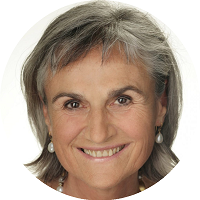
Katharina Russe-Wilflingseder is a board certified Plastic, Reconstructive and Aesthetic Surgeon and a board certified General Surgeon. She completed her residency in General and Plastic and Reconstructive Surgery at the University Hospital of Innsbruck, Austria.
Since 1986 she is operating her privately owned clinic and laser center in Innsbruck, Austria and is specialized in Aesthetic Plastic and Laser Surgery.
Katharina Russe-Wilflingseder is a well-known expert in laser surgery. She has published and lectured on national and international basis and has organized many national and international conferences (e.g. LaserInnsbruck 2008 through 2014) and workshops.
She is a member of the Austrian Society of Plastic, Aesthetic and Reconstructive Surgery, Austrian Society of General Surgery and renowned professional international societies such as the American Society of Plastic Surgeons, American Society for Laser Medicine and Surgery (fellow), International Society of Aesthetic Plastic Surgery (national secretary for Austria).

Contactează operatorul PDI 2026

9 + 14 =

Operatorul PDI 2026

Adresa: Str. A. Panu nr. 13, Iasi
Tel.: 0332.40.88.00-04
E-mail: contact@pdi.ro
Website: www.eventer.ro